Homelab Infrastructure Overview
A 3-node Kubernetes homelab. Been meaning to post this for a while.
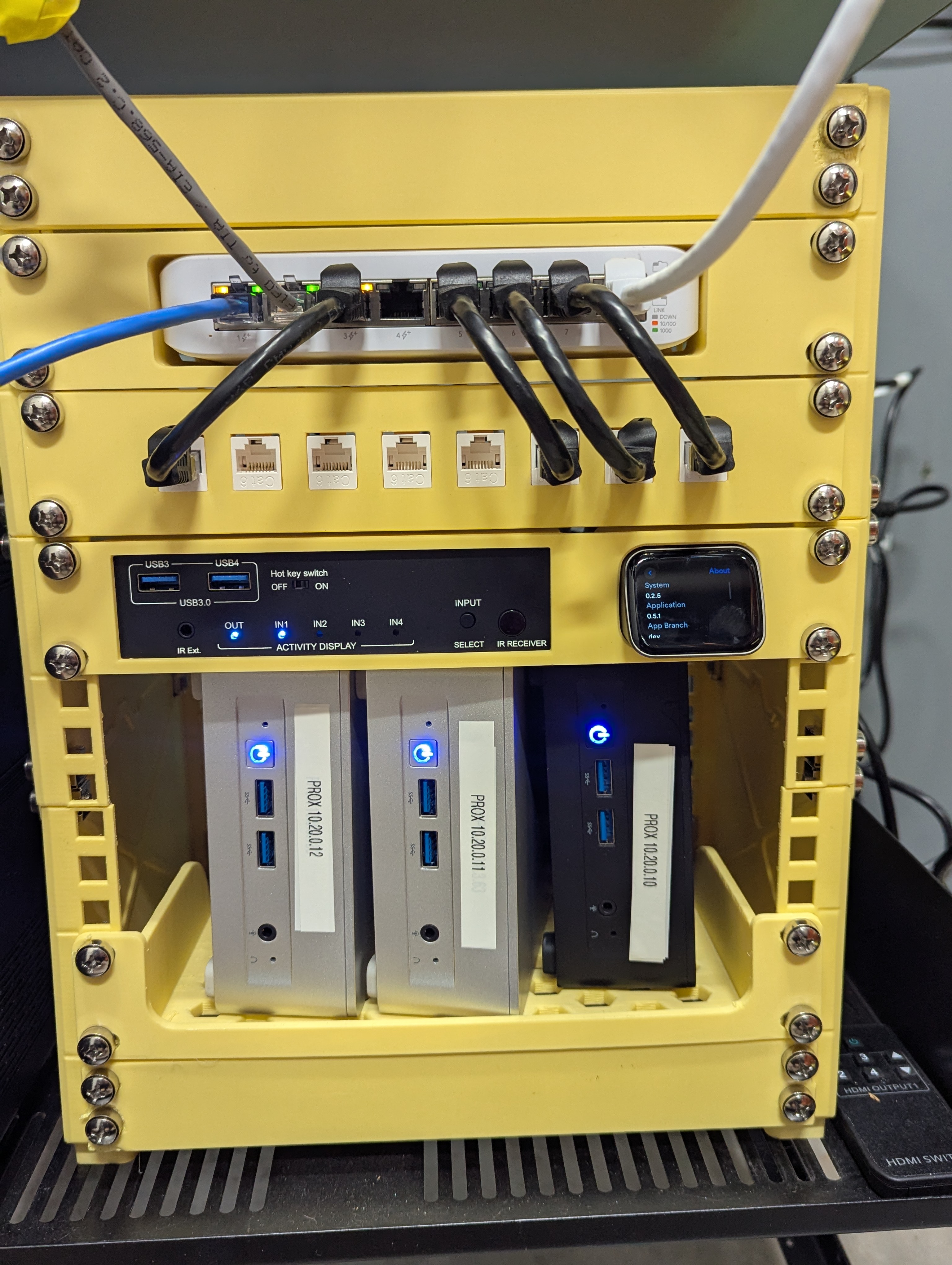
Hardware
Three Minisforum mini PCs in a 3D-printed rack:
- 1x UM760 (Ryzen 5 7640HS) - 32GB RAM, 1TB NVMe
- 2x UM870 (Ryzen 7 8745H) - 32GB RAM, 1TB NVMe each
Small, quiet, power-efficient. The yellow rack is the Modular 10” Server Rack (MOD10) by Mandic, with an EZCOO 4-port KVM + JetKVM setup for local and remote management.
Stack
Proxmox VE 8 (hypervisor)
    └── K3s 1.28 (lightweight Kubernetes)
         └── Flux CD 2.x (GitOps)
              └── All workloads deployed via git
Everything is infrastructure-as-code: OpenTofu for VM provisioning, Ansible for configuration, Flux for Kubernetes resources.
Core Services
All deployed as Flux HelmReleases:
| Service | Purpose |
|---|---|
| Traefik | Ingress controller, TLS termination |
| Longhorn | Distributed storage with 3-way replication |
| cert-manager | Automatic Let’s Encrypt certificates |
| Authentik | SSO/identity provider (OIDC) |
| Velero | Kubernetes backup to Google Cloud Storage |
| MetalLB | Bare-metal LoadBalancer |
| Tailscale | VPN mesh for remote access |
Observability stack: Prometheus + Grafana + Loki for metrics, dashboards, and logs.
Networking
- Pi-hole VM outside K8s handles DNS and ad-blocking for the homelab VLAN
- Tailscale provides secure remote access from anywhere
- Cloudflare Tunnel exposes select services publicly without port forwarding
- UniFi Dream Machine as the network gateway with dedicated homelab VLAN
Last updated: January 2026. Written with Claude.